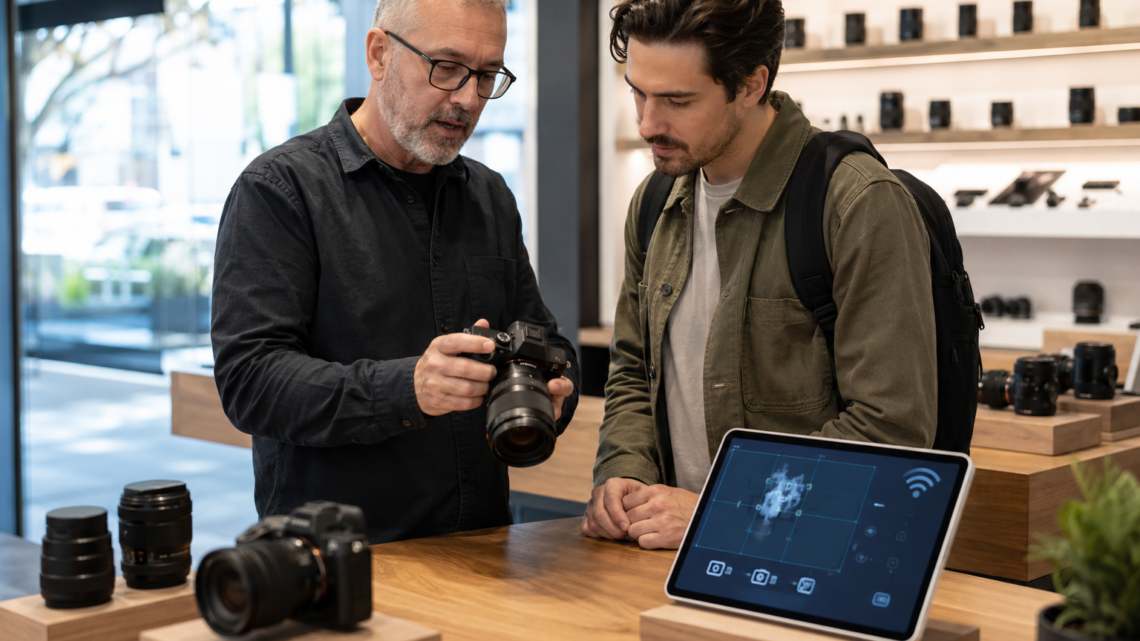
Camera Shop in Perth Adapts to Connected Imaging
August 12, 2026Photography retail is changing as artificial intelligence, connected devices and software-driven workflows reshape how consumers choose equipment. For anyone visiting a camera shop in Perth, the buying process increasingly involves comparing computational features, wireless compatibility and long-term software support alongside traditional specifications such as sensor size, lens selection and build quality.
The modern camera store is consequently becoming a technology advisory environment rather than simply a place to purchase hardware. Staff are expected to explain how cameras integrate with editing platforms, smartphones, cloud services and accessories while helping customers assess whether new features provide practical value for their preferred style of photography.
Artificial Intelligence Moves Into Camera Systems
Camera manufacturers are placing greater emphasis on AI-assisted autofocus, subject detection and automated scene recognition. Current systems can identify people, animals, vehicles and other subjects, then adjust focus tracking as movement occurs within the frame.
These capabilities are designed to reduce the technical workload involved in capturing fast or unpredictable action. Wildlife, sports and event photographers can benefit from more reliable subject recognition, while casual users gain assistance when working in unfamiliar conditions.
AI features are also influencing exposure selection, white balance and image processing. Some devices can analyse a scene and apply adjustments before the photograph is saved. Although experienced photographers may still prefer manual controls, automated tools can improve consistency where speed matters.
Retail advice is becoming important because AI terminology differs between manufacturers. Two products may promote similar capabilities but vary considerably in tracking accuracy, available subject categories and performance under low light. Demonstrations and practical comparisons can help buyers separate useful functions from marketing language.
Connectivity Becomes a Purchase Priority
Wireless connectivity is now central to many photography workflows. Cameras equipped with Wi-Fi and Bluetooth can transfer files to mobile devices, connect with remote-control applications and, in some cases, upload content directly to online platforms.
For creators producing time-sensitive material, rapid transfer can be as important as image quality. News photographers, social media teams and event operators may need to review, edit and publish images shortly after capture.
Compatibility remains a potential issue. Mobile applications can perform differently across operating systems, and some advanced transfer features may require subscriptions or specific file formats. Buyers therefore need to consider the complete workflow rather than assessing the camera body in isolation.
Firmware support is another factor. Manufacturers regularly release updates that improve autofocus, add lens compatibility or resolve connectivity problems. A product with reliable long-term updates may retain practical value for longer than a similarly priced model with limited software support.
Computational Photography Expands Beyond Phones
Smartphones popularised automated multi-frame processing, but dedicated imaging devices are increasingly adopting comparable techniques. Functions such as in-camera compositing, focus stacking and high-resolution capture can combine several exposures to create a finished result.
The concept of computational photography provides a suitable Wikipedia authority-link phrase for readers seeking broader technical context. It describes the use of digital computation to extend or improve conventional image-making processes.
Dedicated cameras maintain advantages in areas including interchangeable lenses, physical controls and larger sensors. However, the gap between capture and processing is narrowing as more devices apply complex adjustments internally.
This development changes how products should be assessed. Sensor resolution remains relevant, but processing speed, software design and feature implementation can now have an equally noticeable effect on everyday use.
Mirrorless Systems Drive Accessory Changes
The transition from digital single-lens reflex equipment to mirrorless systems continues to influence demand for lenses, batteries, storage media and stabilisation equipment. Smaller bodies may reduce carrying weight, but electronic viewfinders and continuous screen use can increase battery requirements.
Higher-resolution video and rapid burst shooting also generate larger files. Buyers may require faster memory cards, additional storage and computers capable of processing demanding formats. Selecting an unsuitable card can limit recording modes or interrupt sustained shooting even when the camera itself supports them.
Lens compatibility adds another layer of complexity. Adaptors can allow older lenses to operate on newer mounts, although autofocus speed, stabilisation and metadata functions may vary. Testing combinations before purchase can help photographers determine whether adapting existing equipment is practical.
Hybrid Cameras Reflect Creator Demand
Demand for hybrid devices capable of producing both still images and video is influencing product design. Features once associated with specialist cinema equipment, including high frame rates, advanced colour profiles and external audio support, are appearing in more mainstream models.
This convergence benefits independent creators who need one system for interviews, promotional content, product photography and social platforms. It also makes purchasing decisions more complicated because strong photographic performance does not guarantee suitable video operation.
Heat management, recording limits, microphone connections and screen articulation may affect usability during extended production. Retail guidance can help customers identify which specifications matter for their intended output rather than paying for functions they are unlikely to use.
Repairs and Circular Technology Gain Attention
Rising equipment costs are also supporting interest in repairs, servicing and pre-owned products. Professional sensor cleaning, firmware checks and mechanical maintenance can extend the usable life of existing devices.
Used equipment offers a lower-cost entry point into established systems, particularly where compatible lenses remain widely available. Condition grading, shutter counts and warranty terms provide important context when assessing value.
Trade-in programs can also contribute to a more circular technology market by returning functional equipment to active use. This approach may reduce electronic waste while helping photographers fund upgrades without replacing every part of their existing setup.
As imaging systems become more connected and software-dependent, specialist retailers will remain relevant by translating technical features into practical purchasing decisions. The strongest retail experience will combine product access with informed advice, demonstrations and support across the complete photographic workflow.